ENT • Rhinology • Facial Plastic Surgery
Mr Robert Maweni
Consultant ENT Surgeon
Rhinology and facial plastic surgery, with a clinical focus on nasal breathing, sinus disease, smell disturbance and functional nasal surgery.
Clear explanations, thoughtful assessment and practical information to support patients and families before and after treatment.


NHS Consultant
Appointments
Norfolk and Norwich University HospitalConsultant ENT Surgeon
James Paget HospitalConsultant ENT Surgeon
About Mr Maweni
ENT, rhinology and facial plastic surgery
Mr Robert Maweni, MB BCh BAO, MCh, FRCS (ORL-HNS), is a Consultant ENT Surgeon working at Norfolk and Norwich University Hospital and James Paget Hospital.
He completed Higher Surgical Training in the Oxford region and a rhinology and facial plastics fellowship in the Thames Valley Region. He also completed a further year of fellowship in Auckland, New Zealand.
His work spans adult and paediatric ENT, nasal breathing and sinus problems, functional nasal surgery, septorhinoplasty and facial reconstruction. He aims to make complex ENT problems easier to understand, with clear explanations and a practical plan.
Current AppointmentsConsultant practice at Norfolk and Norwich University Hospital and James Paget Hospital.
Oxford TrainingHigher Surgical Training in the Oxford region.
Thames Valley FellowshipRhinology and facial plastics fellowship in the Thames Valley Region.
Auckland FellowshipCompleted a further year of fellowship in Auckland, New Zealand.
Education & CommunicationTeaching, research and clear patient information alongside clinical work.

Clinical interests
The problems Mr Maweni focuses on
ENT symptoms often overlap. A blocked nose may affect sleep and smell; sinus disease may mimic facial pain; children’s breathing problems may involve the nose, tonsils and adenoids together.
For Patients and Families
Clear information, before and after your care
Understanding your condition and your treatment can make appointments and recovery feel more manageable. The Patient Information library brings selected guides together in one place.
Explore explanations of common ENT symptoms, information to help you consider surgery, and a dedicated home for future postoperative care guides.
Before SurgeryUnderstand treatment options and prepare questions for your consultation.
Aftercare & RecoveryA dedicated section for postoperative guides as they become available.
General information supports — but does not replace — your own surgical team’s advice.

Nose, sinus and facial structure
Function and form considered together
Rhinology and facial plastic surgery overlap when the nasal airway, septum, sinuses, soft tissue and facial support all influence how someone breathes, looks and feels.
Nasal airflowUnderstanding whether obstruction relates to the septum, turbinates, nasal valve, inflammation, allergy or a combination of factors.
Sinus and smellAssessing persistent sinus symptoms, facial pressure, polyps, post-nasal drip and smell disturbance with careful examination and explanation.
Functional nasal surgeryConsidering breathing, support, shape and expectations together when septoplasty, septorhinoplasty or reconstructive planning may be relevant.

Children’s ENT
ENT problems explained for parents and carers
Children may not describe symptoms in the same way adults do. Snoring, mouth breathing, poor sleep, hearing difficulty, glue ear, recurrent tonsillitis or persistent nasal blockage can show up through behaviour, school listening, tiredness or feeding concerns.
A calm ENT assessment helps separate what is common and likely to settle from problems that need closer review, hearing assessment, treatment planning or surgical discussion.
Hearing and glue earListening difficulties, speech concerns, ear infections and grommet discussions.
Snoring and mouth breathingTonsils, adenoids, nasal blockage and sleep-related symptoms.
Tonsils and throatRecurrent tonsillitis, sore throats and swallowing concerns.
Nosebleeds and nasal symptomsRecurrent nosebleeds, blocked nose and persistent nasal discharge.

Approach to care
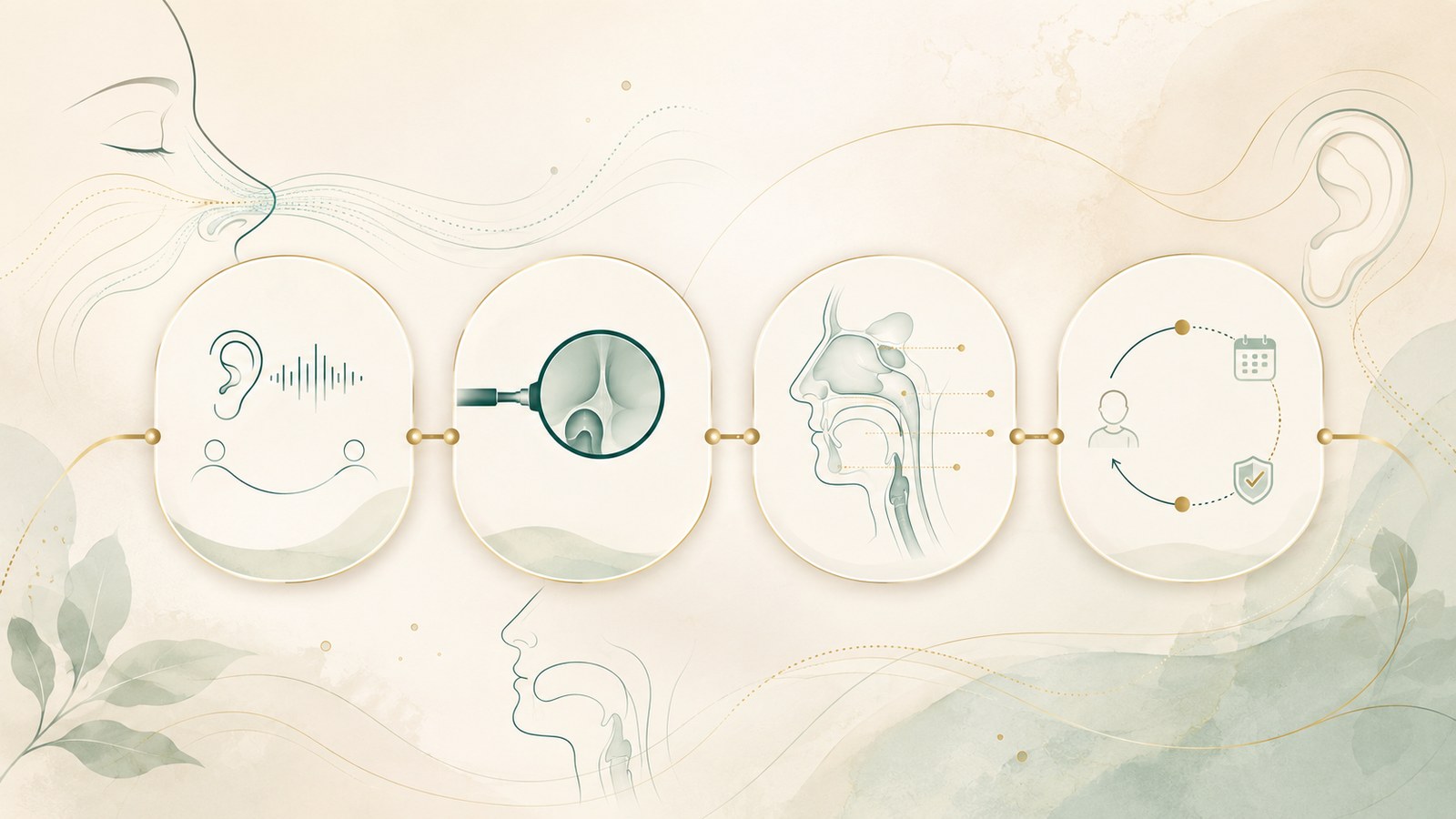
Listen, examine, explain, plan
The same simple structure helps make ENT problems easier to understand, whether the concern is nasal obstruction, sinus disease, a child’s hearing, throat symptoms or facial reconstruction.
- 1Listen
Understand the symptoms, timeline, previous treatment and what matters most.
- 2Examine
Use focused ENT examination, with tests or endoscopy where appropriate.
- 3Explain
Translate clinical findings into plain language and realistic options.
- 4Plan
Agree sensible next steps, including observation, medical treatment, further tests or surgery where needed.
Professional work
Teaching, writing and surgical education
Alongside clinical work, Mr Maweni is involved in teaching, research and digital innovation in surgical education, with interests in rhinology, training optimisation, simulation, AI-enabled induction and digital learning design.
He serves as Rhinology & Facial Plastic Surgery Editor at ENT & Audiology News and is the author of How to Succeed in Medical Research.
- Rhinology and facial plastic surgery education.
- Research, writing and editorial work.
- Surgical training, simulation and induction design.
- Digital learning and clinical workflow innovation.

Patient Information
Practical guides, written for patients
Selected reading on treatment decisions, common symptoms and the questions that matter to you.

Featured Guide Before Surgery
Donated Irradiated Rib Cartilage in Rhinoplasty
Why donated irradiated rib cartilage may be recommended, how it differs from fresh-frozen donor cartilage and your own rib cartilage, and what it means for recovery.
Read the Guide
Aftercare & Recovery
Primary Septoplasty Aftercare
Your guide to recovery after open or closed septoplasty, including splints, saline rinsing, prescribed medicines, wound care and follow-up.
Read the Guide
Nose & Sinus
Recurrent Nosebleeds in Adults
A practical guide to recurrent adult epistaxis, including first aid, common causes, anterior versus posterior bleeds, red flags and ENT treatment options.
Read the GuideContact
Professional, education and editorial enquiries
For teaching, research, writing, editorial, speaking or professional collaboration enquiries, contact Mr Maweni by email.
Please do not send confidential medical information by ordinary email. For personal symptoms or clinical concerns, use your usual healthcare route.