
The routine I recommend
Your Aftercare at a Glance
This is the usual plan for my patients after primary septoplasty. It applies to both open and closed surgery, with additional wound care after an open approach. Your individual discharge instructions take priority if I have adjusted your treatment.
Rinse 4 Times a Day
Start at the time specified by your surgical team. After each rinse, use a thin layer of the recommended nasal emollient.
Doyle Splint Removal
If Doyle splints are present, I remove them at the two-week review. Take your prescribed oral antibiotics until they are removed, unless the treating team changes your prescription.
Rinse Twice a Day
Continue saline rinsing twice daily until three months after surgery. Apply your recommended emollient after rinsing; confirm which product to continue.
In my practice, open cases have both internal and external splints. Use the prescribed chloramphenicol ointment on the columellar wound. We also trim the remaining exposed dissolvable stitch at review. The removal date for your external splint will be confirmed separately; it may or may not be the same visit as your internal splints.
Save this page before surgery, and keep your discharge sheet and hospital contact numbers beside it. The exact start time for rinsing, external-splint appointment and ointment instructions should be clear before you go home.
Understanding your operation
What Is Different After Open and Closed Surgery?
Septoplasty adjusts the cartilage-and-bone partition between the nasal passages to help improve airflow. A first-time operation is described as primary surgery. Straightening that partition is different from deliberately changing the external shape of the nose, although the procedures can be combined. [2]
With a closed approach, the incisions are inside the nose. An open approach also uses a small incision across the columella—the strip of skin separating the nostrils. Open access may be part of more extensive septal reconstruction or functional septorhinoplasty; it does not, by itself, mean that your surgery is cosmetic. [3]
Closed surgery
Care Inside the Nose
There is no external columellar incision. Some of my closed cases have internal Doyle splints; others do not. Your discharge sheet will state which applies.
Open surgery
Internal Care Plus Wound Care
My open cases have internal and external splints, together with a small columellar wound requiring prescribed chloramphenicol ointment and review.

The saline-and-emollient routine remains important in both groups. Any additional instructions for grafts, turbinate treatment or work on the nasal bones should be followed alongside this guide.
Prepare before the day
Make Recovery Easier to Manage
Arrange a lift home and an adult to stay with you for at least the first 24 hours after a general anaesthetic. During that period, do not drive, operate equipment, drink alcohol, make important decisions or care for dependants alone. Follow any longer restrictions given by the hospital. [4]
Before discharge, check that you have the recommended rinse device and saline sachets, access to safe water, your emollient, prescribed medicines and written instructions. Open-surgery patients should also have their wound ointment and external-splint appointment.
Tell the team about medicine allergies and all medicines you take. Ask for a specific plan for any blood-thinning medication or CPAP treatment; do not make changes yourself. Check that your supply of antibiotics covers the planned period with Doyle splints, and that you know whom to call if the appointment changes.
The early days
Why Does My Nose Still Feel Blocked?
Early stuffiness is expected: swelling, dried blood, crusts and any internal splints or packing all take up space. Mouth breathing can leave your mouth dry. A blocked nose in the early recovery period does not, on its own, tell us whether the operation has worked. [5]
A little blood-stained watery discharge and crusting can occur, especially in the first few days. Do not pick crusts or pull away material inside the nose. Regular prescribed rinsing helps to clear debris gently. Steady fresh bleeding, or worsening pain and blockage, is different from ordinary healing. [6]
Breathing usually improves gradually rather than immediately, and settling can take several weeks to around three months. More extensive external nasal surgery may take longer to settle in appearance. Persistent or worsening symptoms should be reviewed, not simply left until that time has passed. [5][3]
Support while you heal
Doyle Splints and Your Antibiotics
Doyle splints are internal silicone supports positioned alongside the septum. They help support the healing tissues and keep opposing surfaces apart. They are not the same as dissolvable packing, and they do not dissolve. A stitch may hold them in place. [7]
In my practice, Doyle splints are removed at two weeks. While they remain in place, take the oral antibiotics I have prescribed until removal, unless your treating team changes that instruction. Do not stop early just because your nose feels better.
Postoperative antibiotic policies vary. Research has not established one antibiotic regimen as necessary for every septoplasty patient, so this is my prescribed protocol for patients with Doyle splints, not an instruction to obtain antibiotics independently. [7]
Do not move, cut, pull out or try to clear a splint with an object. Contact the team if it seems displaced. If removal is delayed or your tablets will run out, ask the prescribing team what to do; do not simply stop, extend the course yourself or use leftover tablets.
Antibiotics can cause side effects such as diarrhoea or nausea. Seek advice promptly if side effects are troublesome or severe. A new rash needs medical advice; swelling of the lips, tongue or throat, wheezing, collapse or breathing difficulty may indicate a serious reaction and requires emergency help. [8]
Your daily routine
How to Rinse Your Nose Safely
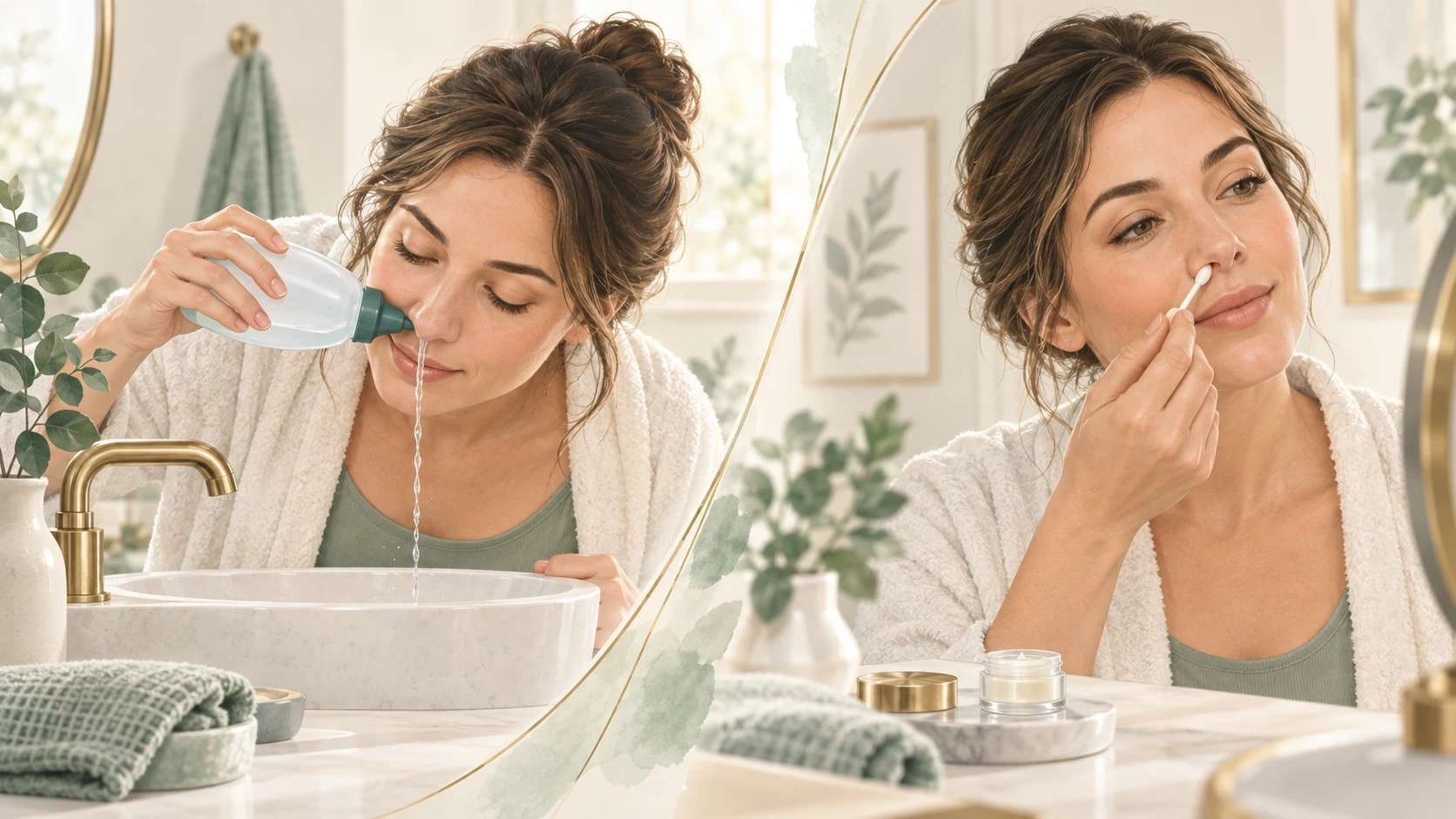
I recommend four rinses each day for the first two weeks, then two each day until three months after surgery. A practical first-fortnight pattern is morning, lunchtime, late afternoon and early evening. Start when your team tells you to, and continue even after splint removal unless your plan changes.
Use the rinse device and volume demonstrated by the team. A moisturising spray is not automatically a substitute for the prescribed rinse. Irrigation and sprays deliver saline differently. [9]
Prepare the Water and Saline
Use water labelled sterile or distilled, or tap water brought to a rolling boil for at least one minute and then allowed to cool. Do not use hot water, untreated tap water or ordinary bottled drinking water as a substitute. Safe drinking water is not necessarily safe for nasal rinsing. [10]
Use the recommended saline sachet with the specified amount of water; plain water may sting. Make the solution fresh where practical. If you keep previously boiled water, store it in a clean, closed container and use it within 24 hours. [9]
Keep the Technique Gentle
Wash your hands. Lean forward over the sink, keep your mouth open and breathe through it. Place the nozzle just at the nostril entrance, without pressing on the nose or splints. Use gentle pressure and the technique demonstrated at discharge, then let the fluid drain. Do not force fluid through a completely blocked passage. [9]
If rinsing causes significant pain, ear pressure or fresh bleeding, stop and ask the team for advice. Do not push the nozzle deeper, increase pressure or probe a splint channel. Gently dab the outside afterwards; avoid nose blowing until your team says it is safe. [9][11]
Clean the device after each use and let it dry according to its instructions. Do not share it. [9]
After each rinse
Use a Thin Layer of the Recommended Emollient
Once the rinse has drained, apply a thin smear of the product recommended for you at the front of the nostril. This is my usual aftercare routine. Use a clean fingertip or the applicator technique demonstrated by the team; do not insert a cotton bud deeply or disturb splints and stitches.
Vaseline is petroleum jelly. Where it is recommended, use only a small amount at the entrance, without packing the nose or sniffing it backwards. Repeated inhalation of oily products over a prolonged period can rarely cause lung inflammation called lipoid pneumonia. For ongoing lubrication, ask whether a water-soluble nasal gel would be more suitable. Apply sparingly while upright and not within several hours of lying down. [12]
The three-month rinsing plan does not mean using petroleum jelly deeply or indefinitely. Confirm the product and duration for your continuing emollient care at review. If you have swallowing difficulties or a risk of aspiration, raise this before using an oily product. [12]
Residue on bedding, clothing or dressings can make fabric catch fire more easily. Avoid smoking and naked flames, including candles, around these materials. Washing reduces residue but may not remove it completely. [1]
Open surgery only
Caring for the Columellar Wound
My open-surgery patients have both internal and external splints and use prescribed chloramphenicol ointment on the small wound between the nostrils. This is separate from the emollient used at the nostril entrance.
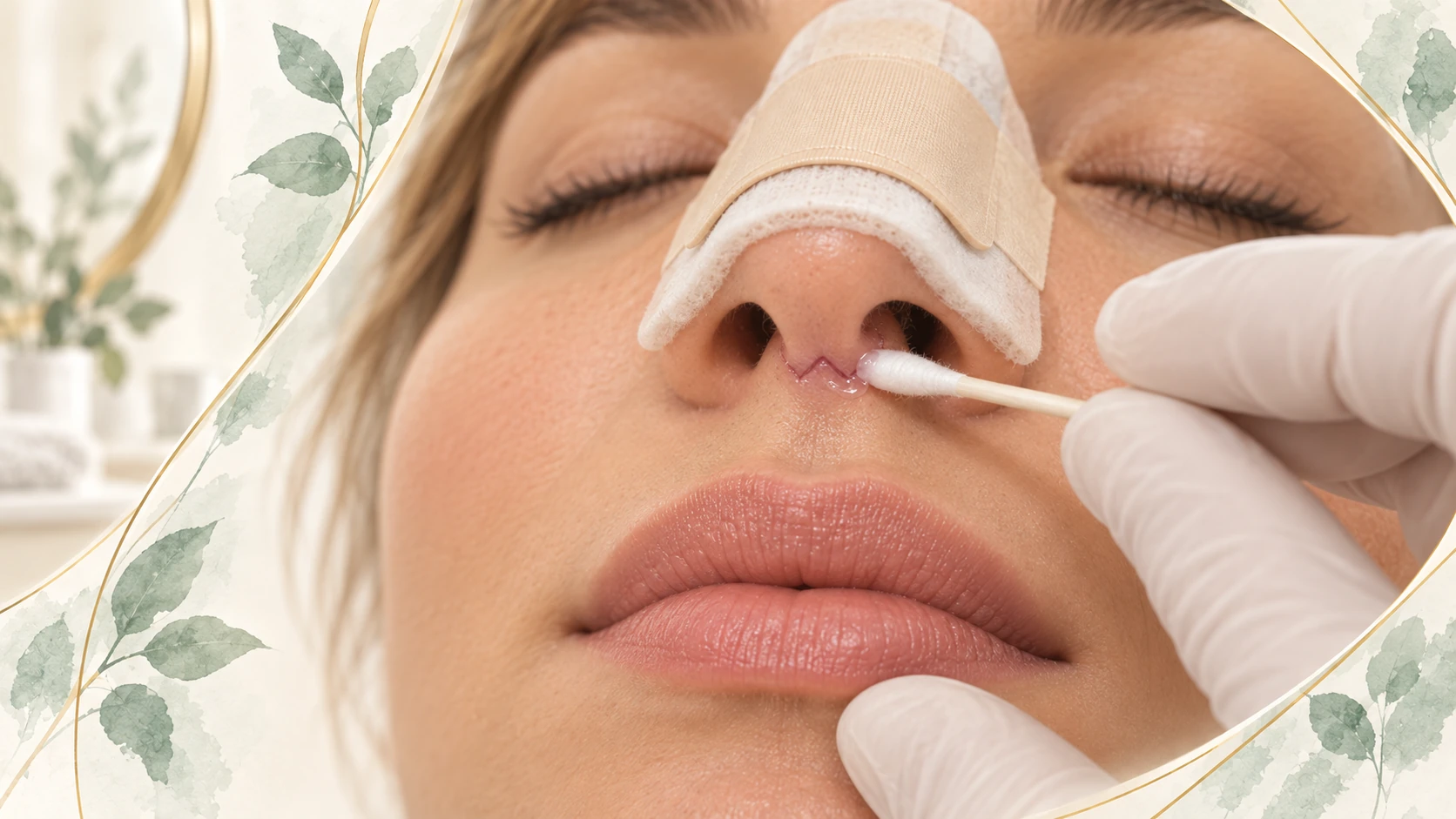
Apply a thin layer to the wound using clean hands and the method demonstrated by the team. Avoid touching the tube nozzle to the skin. Follow the pharmacy label for how often to apply it and when to stop; the rinse schedule does not determine the antibiotic-ointment schedule. [13]
The tube may say eye ointment. Clinicians also prescribe this preparation for selected skin wounds, outside its eye-use licence. Use it only because it has been prescribed for your wound; do not buy a substitute or use somebody else’s medication. [13]
Keep wound handling minimal. Gently clean it only as instructed, rather than scrubbing away crusts or adding unprescribed antiseptics and creams. Increasing redness, warmth, pain, wound separation or discharge needs review. [14]
We will assess the wound and trim the remaining exposed dissolvable stitch at review. Do not pull or cut a stitch yourself. Keep the external splint and its tape dry and do not lift them to look underneath. Contact the team if the splint becomes loose or wet. [6]
Once the wound has fully closed, we can discuss scar care. Do not begin massage or silicone treatment over a fresh incision. A scar can continue changing for months; protect healed skin from sun exposure rather than expecting an immediately invisible line. [15]
Protecting your recovery
Sleeping, Washing and Getting Back to Normal
Rest with your head comfortably supported and avoid pressure on your nose. Keep an external splint dry when washing; use lukewarm rather than very hot water initially. If you sneeze, let it happen with your mouth open instead of pinching the nose shut. [11][6]
Use the pain relief specified on your discharge sheet. Ask your team or pharmacist before adding other painkillers or changing prescribed medicines. Pain that is escalating or not controlled by the supplied treatment is a reason to seek advice. [2]
Gentle movement is encouraged after anaesthesia, rather than spending the whole recovery in bed. [4] Avoid strenuous activity, heavy lifting and the risk of a knock to the nose until cleared. Many patients plan around two weeks away from work, with longer or different restrictions for physical work and more extensive surgery. [3]
Do not treat the two-week review as automatic clearance for running, weights, swimming or contact sport. Ask about your own activity, flying and glasses or mask use, especially if the nasal bones or external framework were treated. [3]
Avoid smoke and dusty environments while the lining heals. Smoking can irritate the nose and delay healing. [2]
A planned check, not the end of healing
Your Two-Week Review
If you have Doyle splints, this is when I remove them and check the inside of your nose. In open cases, we also review the wound and trim any remaining exposed dissolvable stitch. Attend the appointment arranged for the external splint; do not assume its removal date is the same as the internal splints.

Bring your medicine list and any questions about rinsing, discomfort or returning to normal activities. We will confirm when to stop the prescribed antibiotics, what wound ointment or emollient to continue, and any further follow-up.
Continue twice-daily saline rinses until three months after surgery. Splint removal is an important milestone, but it does not mean all swelling has disappeared. Contact us earlier for deterioration rather than waiting for the next planned visit. [5]
Do not wait for routine follow-up
When to Seek Help
Emergency Help
Seek emergency care for heavy or uncontrolled bleeding, swallowing large amounts of blood, faintness or significant breathing difficulty. Call 999 for severe breathing difficulty, collapse or a serious allergic reaction. Do not drive yourself. [16][8]
Same-Day Surgical Assessment
Seek advice for increasing nasal pain and blockage, particularly if worsening together; fever; feeling markedly unwell; or pain that is not controlled. These can indicate infection or a collection beneath the septal lining that may need urgent treatment. Do not wait for a fever or rely on antibiotics alone. [2]
Also contact the team for a wound that opens, increasing redness or pus-like discharge, or a displaced splint. Green or unpleasant-smelling discharge together with worsening symptoms should be assessed. [14][5]
If Fresh Bleeding Starts
Stop what you are doing, sit upright and lean forward. Do not blow your nose, pull out a splint or insert tissue or other packing. Follow the specific bleeding instructions supplied after your operation. Bleeding that remains steady or lasts longer than 10–15 minutes needs urgent assessment; do not wait that long if it is heavy or you feel unwell. [16]
Call the operating hospital or surgical team using the numbers on your discharge sheet. If you cannot reach them, use NHS 111 for urgent advice or attend the emergency department when symptoms require it. A website enquiry form or routine email is not an emergency service.
Questions during recovery
Common Questions
Do all patients have Doyle splints?
No. Some closed cases have them and some do not. My open cases have internal and external splints. Your discharge instructions should clearly identify what was used.
Can I stop rinsing once the splints are out?
No—not under my usual protocol. After the first two weeks, reduce from four rinses a day to two and continue until three months after surgery, unless your individual plan changes.
Should I still take the antibiotics if I feel well?
Yes: take the prescribed oral antibiotics until Doyle splint removal, unless your treating team changes the prescription. Contact the team about side effects, a delayed removal appointment or an insufficient supply.
Can I rinse while an external splint is on?
Follow the rinse technique demonstrated at discharge while keeping the outside splint and tape dry. Do not remove the external splint to wash, rinse or inspect the nose.
What if saline will not pass through?
Do not increase the force or insert the nozzle farther. Stop and ask the team how to adapt the technique. Increasing blockage with increasing pain needs same-day assessment.
Does “dissolvable” mean I can pull off a visible stitch?
No. Leave it alone. In open cases, we review the wound and trim the remaining exposed stitch in clinic.
When can I blow my nose?
Do not blow it until your surgical team confirms it is safe. Ask at discharge and review; the answer depends on what was done and whether splints remain in place. Do not use nose blowing to clear a blocked splint.
Rinse regularly, use only the recommended products, leave splints and stitches alone, and keep your review appointments. Your core schedule is four rinses daily for two weeks, then twice daily to three months, with prescribed oral antibiotics until Doyle splint removal and additional wound care after open surgery.
Evidence and further reading
References
References are numbered by their first appearance. The exact rinse, splint and prescribing schedule above describes my practice; linked resources may describe different local protocols. This guide supports, rather than replaces, your individual discharge instructions.
- Medicines and Healthcare products Regulatory Agency. Emollients and risk of severe and fatal burns: new resources available.Drug Safety Update. Accessed 22 September 2026.
- ENT UK. Septal surgery.Patient information; published 15 July 2022. Accessed 22 September 2026.
- ENT UK. Septorhinoplasty.Patient information. Accessed 22 September 2026.
- NHS. General anaesthesia.Patient information. Accessed 22 September 2026.
- Cambridge University Hospitals NHS Foundation Trust. Information after septorhinoplasty.Document 4416, version 5; approved 20 November 2023. Accessed 22 September 2026.
- Gloucestershire Hospitals NHS Foundation Trust. Septoplasty aftercare advice (ENT).GHPI1910_06_25; review due June 2028. Accessed 22 September 2026.
- Zavdy O, Nakache G, Alkan U, Hazan A, Reifen E, Ritter A. Prophylactic antibiotics in septoplasty with intranasal septal splints: A comparative analysis.Clinical Otolaryngology. 2024;49(1):94–101. doi:10.1111/coa.14104. Accessed 22 September 2026.
- NHS. Antibiotics: Side effects.Medicine information. Accessed 22 September 2026.
- US Food and Drug Administration. Is Rinsing Your Sinuses With Neti Pots Safe?Consumer safety information. Accessed 22 September 2026.
- US Centers for Disease Control and Prevention. How to Safely Rinse Sinuses.Nasal-rinsing safety guidance. Accessed 22 September 2026.
- NHS. Nose reshaping (rhinoplasty).Patient information. Accessed 22 September 2026.
- Mayo Clinic. Petroleum jelly: Safe for a dry nose?16 March 2023. Accessed 22 September 2026.
- Alder Hey Children’s NHS Foundation Trust. Chloramphenicol 1% Ointment for application to skin.Revised 28 March 2024; next review March 2027. Accessed 22 September 2026.
- Dorset County Hospital NHS Foundation Trust. After Care Advice for Your Surgical Wound/Excision or Skin Graft.Written May 2024; review due May 2027. Accessed 22 September 2026.
- NHS. Scars.Patient information. Accessed 22 September 2026.
- NHS. Nosebleed.Patient information. Accessed 22 September 2026.
Illustrations are explanatory, not photographs of individual patients or exact representations of every device or operation. Follow the technique demonstrated by your surgical team.