
First, is it always the same side?
Many people notice that one nostril feels more open than the other. That can be normal. The lining of the nose naturally swells and decongests in a rhythm called the nasal cycle, so airflow may feel uneven even when nothing serious is happening.
The pattern becomes more important when the blockage is persistent. A nose that is nearly always worse on the same side may point towards a structural narrowing, such as a deviated septum, a narrow nasal valve, scarring or a local obstruction. Blockage that clearly swaps from side to side is often more suggestive of swelling of the nasal lining or turbinates, especially if it changes with allergy, colds, alcohol, lying down, temperature change or irritants.
Common causes of one-sided or uneven nasal blockage
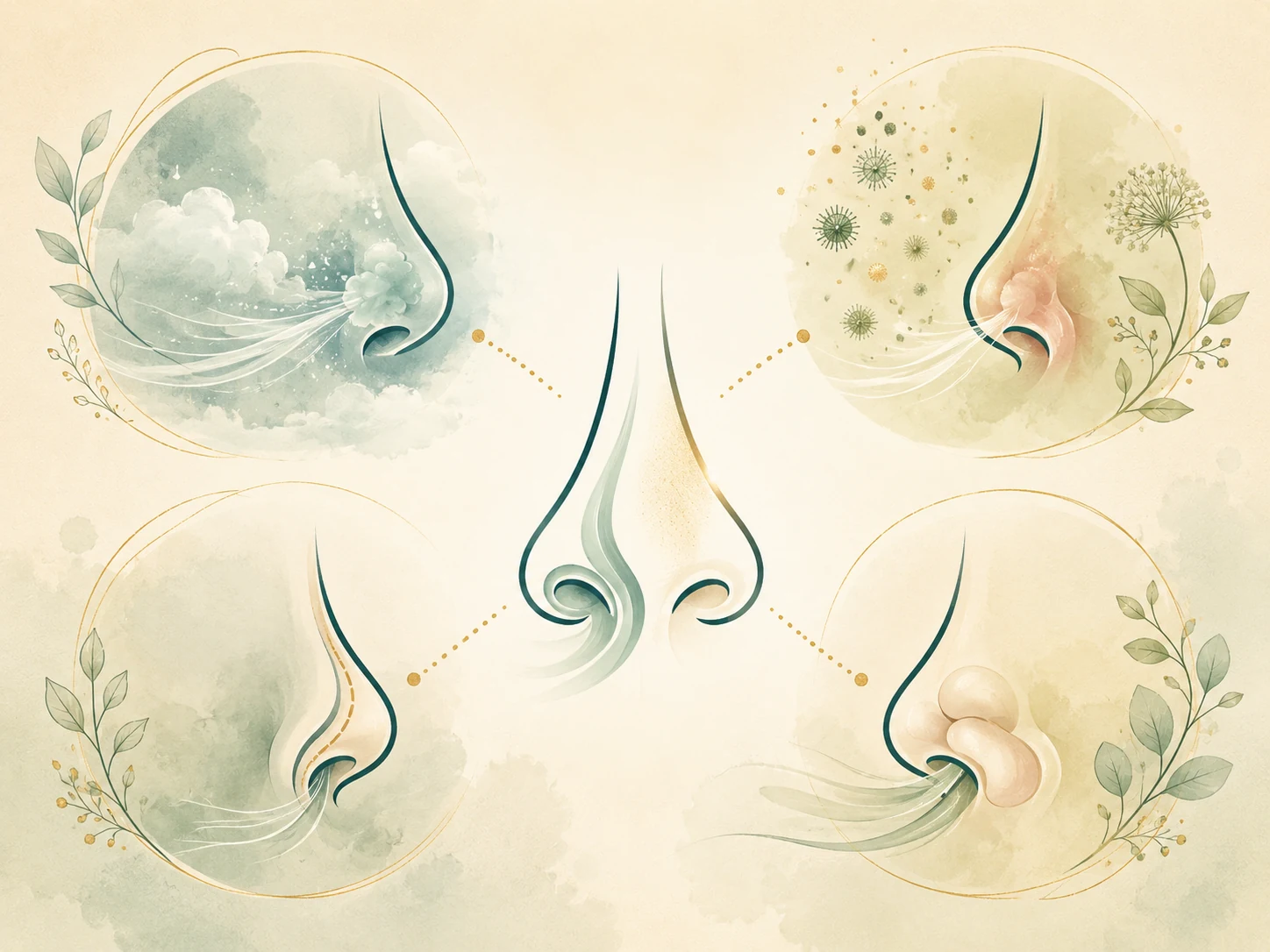
The nose is not a straight pipe. Airflow depends on the septum, turbinates, nasal lining, nasal valve, sinuses and the shape of the outside of the nose. A small change in more than one area can make breathing feel much worse than any single finding might suggest.
What an ENT assessment tries to clarify
Assessment usually starts with the story: duration, side, triggers, smell, discharge, bleeding, previous injury, previous nasal surgery, allergy symptoms, sinus symptoms and sleep quality. The outside of the nose may be examined as well as the inside, because a person can have both septal narrowing and nasal valve collapse.
Depending on the symptoms, the nose may be inspected with a light or with a small flexible camera. The aim is to separate inflammatory causes from structural causes. Inflammatory problems may respond to measures such as allergen control, saline irrigation or anti-inflammatory nasal sprays when appropriate. Structural problems such as significant septal deviation, turbinate enlargement or nasal valve narrowing may need a different discussion.
Surgery is not the starting assumption. It is one possible option after the pattern is understood, after medical treatment has been considered, and after the likely benefits and limitations have been discussed.
When to seek medical advice
Arrange a medical review if nasal blockage is persistent, unexplained, always on one side, affecting sleep or exercise, associated with reduced smell, or not settling after a reasonable period. Children with one-sided blockage and unpleasant discharge should be checked because a small object in the nose is one possible cause.
Sources and further reading
This article is general public information and was written using UK, European and well-regarded US sources. It should not replace personal medical advice.
- Septal deviation and unilateral nasal obstructionRight Decisions / NHS Scotland
- Septal surgeryENT UK
- Allergic rhinitisNHS
- Nasal polypsNHS
- Position statement: nasal valve repairAmerican Academy of Otolaryngology–Head and Neck Surgery
More reading
Related articles
Use your usual healthcare route for symptoms. For professional, education, writing or website enquiries, use the contact section on the homepage.