
The main smell terms
A change in smell can be surprisingly unsettling. It can affect food, mood, safety, appetite, social confidence and enjoyment of familiar places. People may say that they have “lost taste”, but often the problem is that flavour is reduced because smell contributes so much to flavour.
Common causes of lost or changed smell
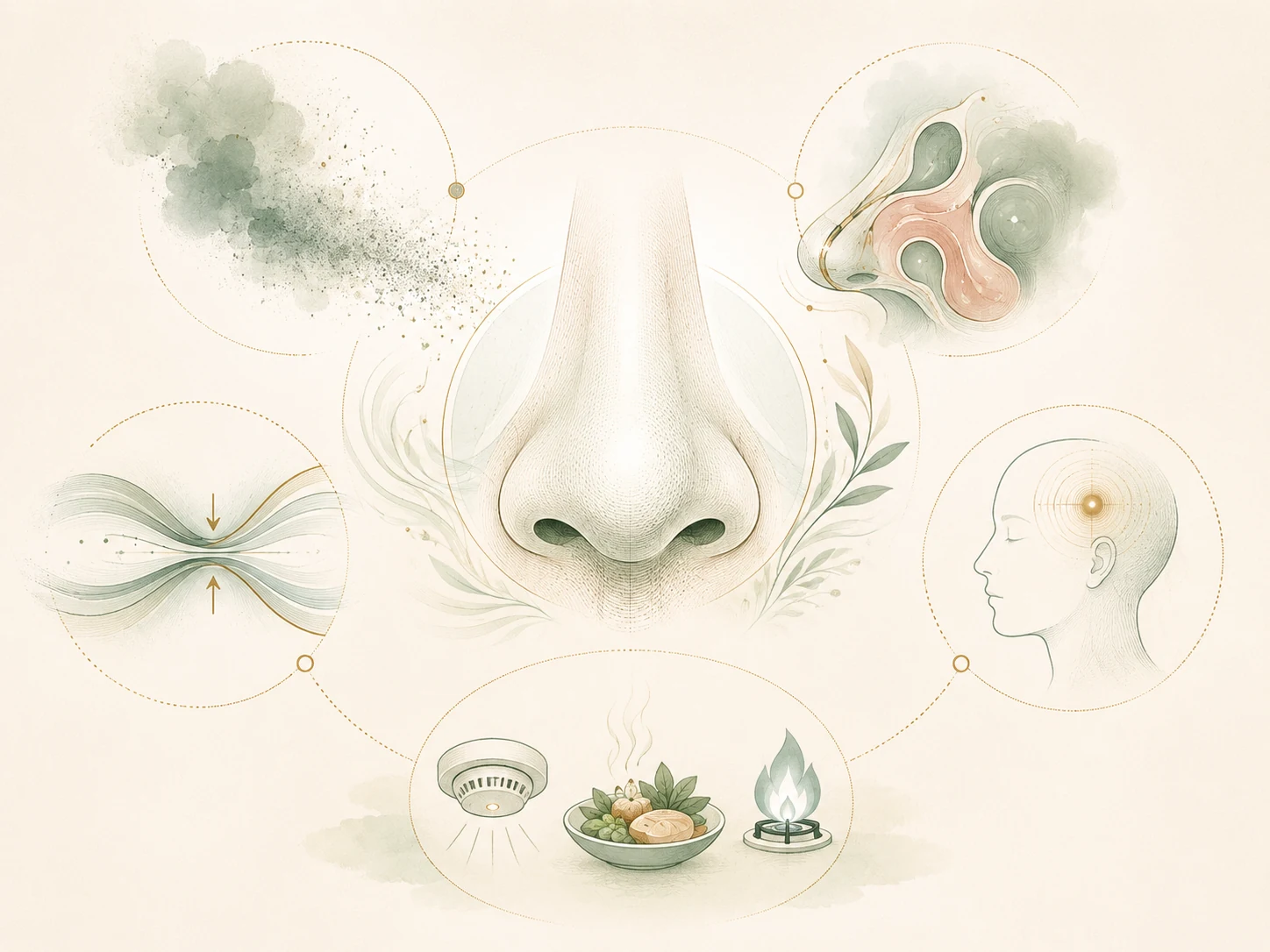
Short-term smell loss is often linked to a cold, flu, COVID-19 or nasal congestion. If the airflow cannot reach the smell area high in the nose, smell may drop. In many people this improves as the infection or congestion settles.
Longer-lasting smell changes can follow viral illness, head injury, chronic rhinosinusitis, nasal polyps, allergic rhinitis, medication effects, smoking, toxin exposure or neurological conditions. Sometimes no single cause is found. Smell can also become less sharp with age.
The pattern helps. A blocked nose with reduced smell suggests airflow or sinus inflammation may be involved. A sudden smell change after a viral illness may be post-viral. Smell loss after head injury deserves medical review. One-sided symptoms, bleeding, crusting or a new nasal blockage should not be ignored.
Safety and everyday impact
Smell is an early warning system. If it is reduced, check that smoke alarms work, consider gas safety carefully, follow food storage guidance, use sell-by and use-by dates, and ask someone else to check food or household smells if needed.
Smell change can also affect wellbeing. Food may become less enjoyable, some people lose weight, and others use more salt, sugar or spice to chase flavour. Parosmia can make previously pleasant foods smell burnt, chemical or rotten. It is reasonable to mention the emotional and practical impact when seeking advice; it is not “just a smell problem”.
When to seek medical advice
Seek advice if smell loss is persistent, unexplained, follows a head injury, is associated with one-sided nasal symptoms, bleeding, severe headache, neurological symptoms, facial swelling or significant nasal blockage. Review is also sensible if smell change is affecting eating, safety, work or quality of life.
Sources and further reading
This article is general public information and was written using UK, European and well-regarded US sources. It should not replace personal medical advice.
- Lost or changed sense of smellNHS
- Smell disordersNIDCD
- Anosmia / change in sense of smellRight Decisions / NHS Scotland
- Loss of smell causesMayo Clinic
- Anosmia / smell disordersENT UK
More reading
Related articles
Use your usual healthcare route for symptoms. For professional, education, writing or website enquiries, use the contact section on the homepage.