
What sinusitis actually means
People often say “my sinuses are playing up” when they feel facial pressure, mucus at the back of the throat, a blocked nose, headache, reduced smell or a heavy feeling behind the eyes. Sometimes that is sinusitis. Sometimes it is allergy, rhinitis, migraine, nasal polyps, dental disease or several things at once.
The sinuses are air-filled spaces in the face and forehead that drain into the nose. Sinusitis means inflammation affecting the sinuses and their drainage pathways. The lining swells, mucus does not drain as easily and the nose can feel blocked or full.
Acute sinusitis commonly follows a cold or flu. Chronic rhinosinusitis is a longer inflammatory pattern, usually discussed when symptoms persist for 12 weeks or more. Chronic symptoms are not simply “an infection that needs repeated antibiotics”; they can involve inflammation, allergy, polyps, asthma, anatomy, environmental irritation and the way the nose drains.
Why allergy, rhinitis and polyps can feel like “sinus”
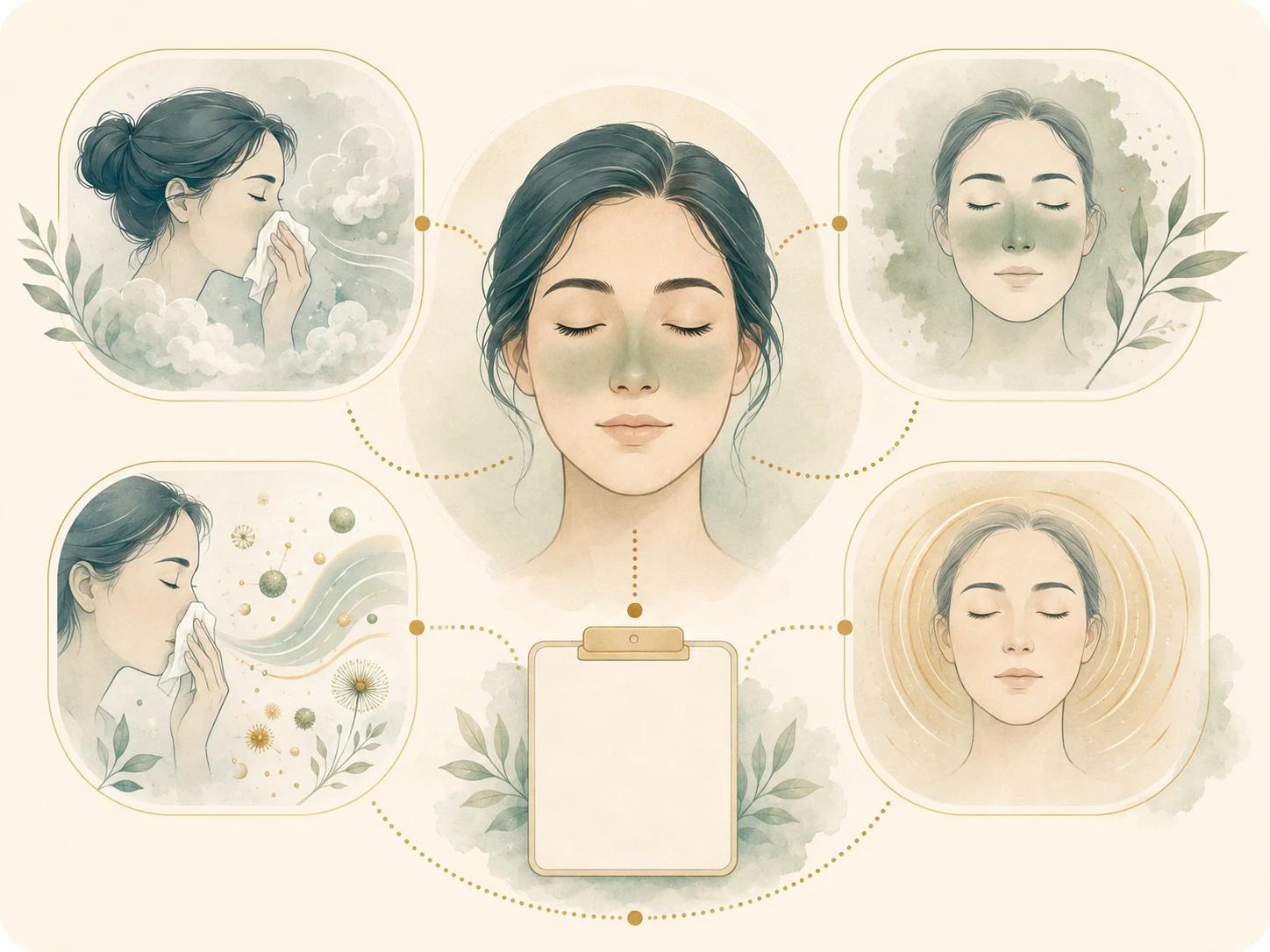
Allergic rhinitis can cause sneezing, itch, watery eyes, runny nose, blocked nose and cough from post-nasal drip. These symptoms can sit alongside facial pressure and reduced smell, so it is easy for allergy to be mistaken for sinus infection.
Non-allergic rhinitis can also cause blockage and dripping without a classic pollen or dust-mite allergy. Triggers can include cold air, strong smells, smoke, pollution, alcohol, spicy food or changes in humidity. Nasal polyps can create a more persistent pattern: blocked nose, post-nasal drip, reduced smell or taste and snoring.
Patterns that help separate the causes
A clinician may ask about asthma, aspirin/anti-inflammatory sensitivity, repeated infections, previous surgery, dental symptoms, occupation, smoking or vaping exposure, and how symptoms affect sleep and work. Examination may include looking inside the nose and, in some cases, nasal endoscopy or imaging if the history and examination suggest it is needed.
When to get reviewed
Arrange advice if symptoms last longer than expected, keep returning, affect sleep or work, or are associated with reduced smell, polyps, asthma, recurrent infections or one-sided symptoms. A review is also sensible if over-the-counter treatments are not helping or are being used repeatedly without a clear plan.
Sources and further reading
This article is general public information and was written using UK, European and well-regarded US sources. It should not replace personal medical advice.
- SinusitisNHS
- Chronic sinusitis managementNICE Clinical Knowledge Summaries
- EPOS 2020 executive summaryRhinology / EPOS
- Allergic rhinitisNHS
- Nasal polypsNHS
- Hay fever and allergic rhinitisAllergy UK
More reading
Related articles
Use your usual healthcare route for symptoms. For professional, education, writing or website enquiries, use the contact section on the homepage.