What parents may notice
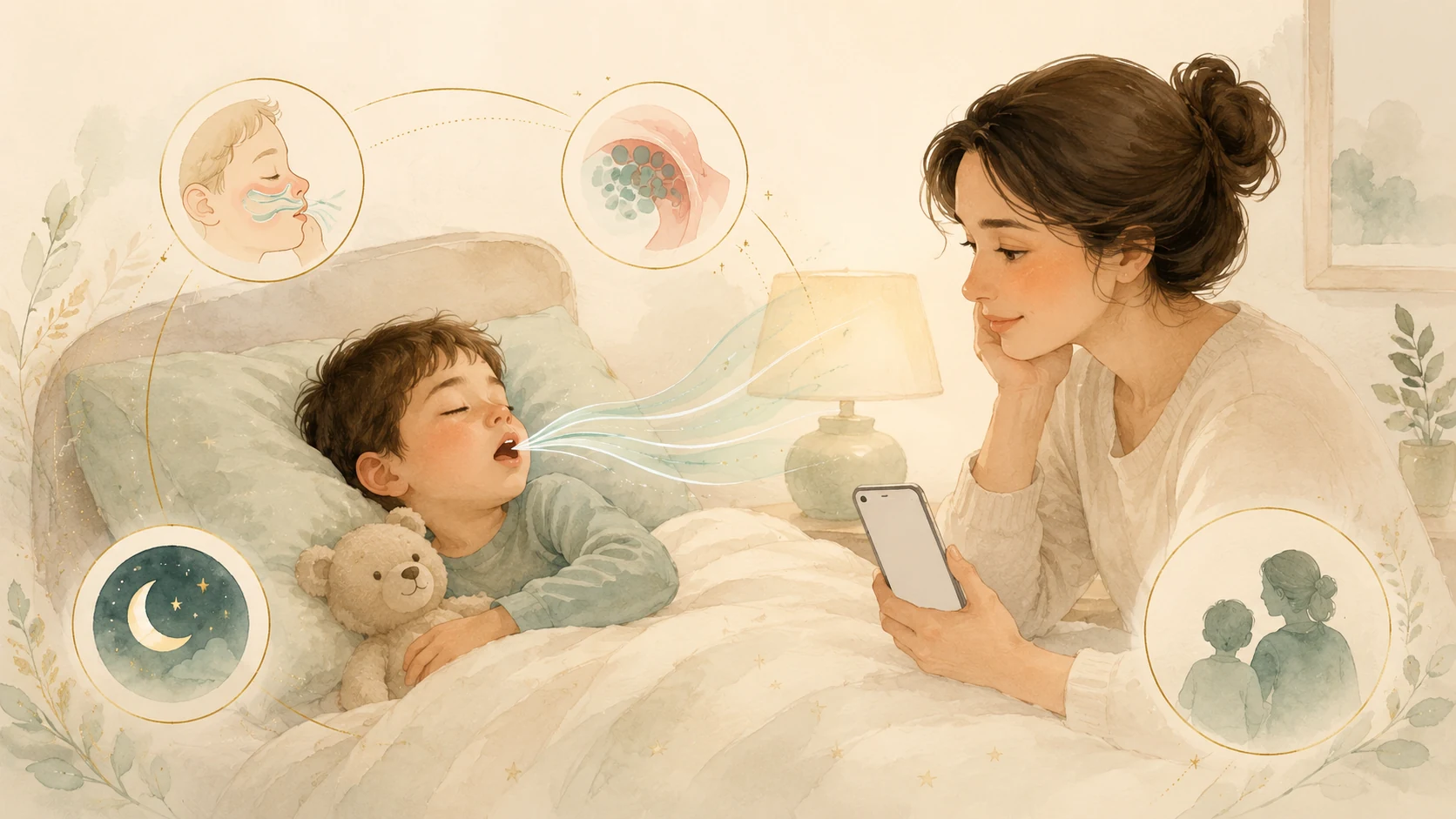
Many children snore now and again, especially during a cold. The question is whether the pattern is occasional and short-lived, or regular and affecting sleep quality. Regular loud snoring, mouth breathing, restless sleep or pauses in breathing are worth discussing with a healthcare professional.
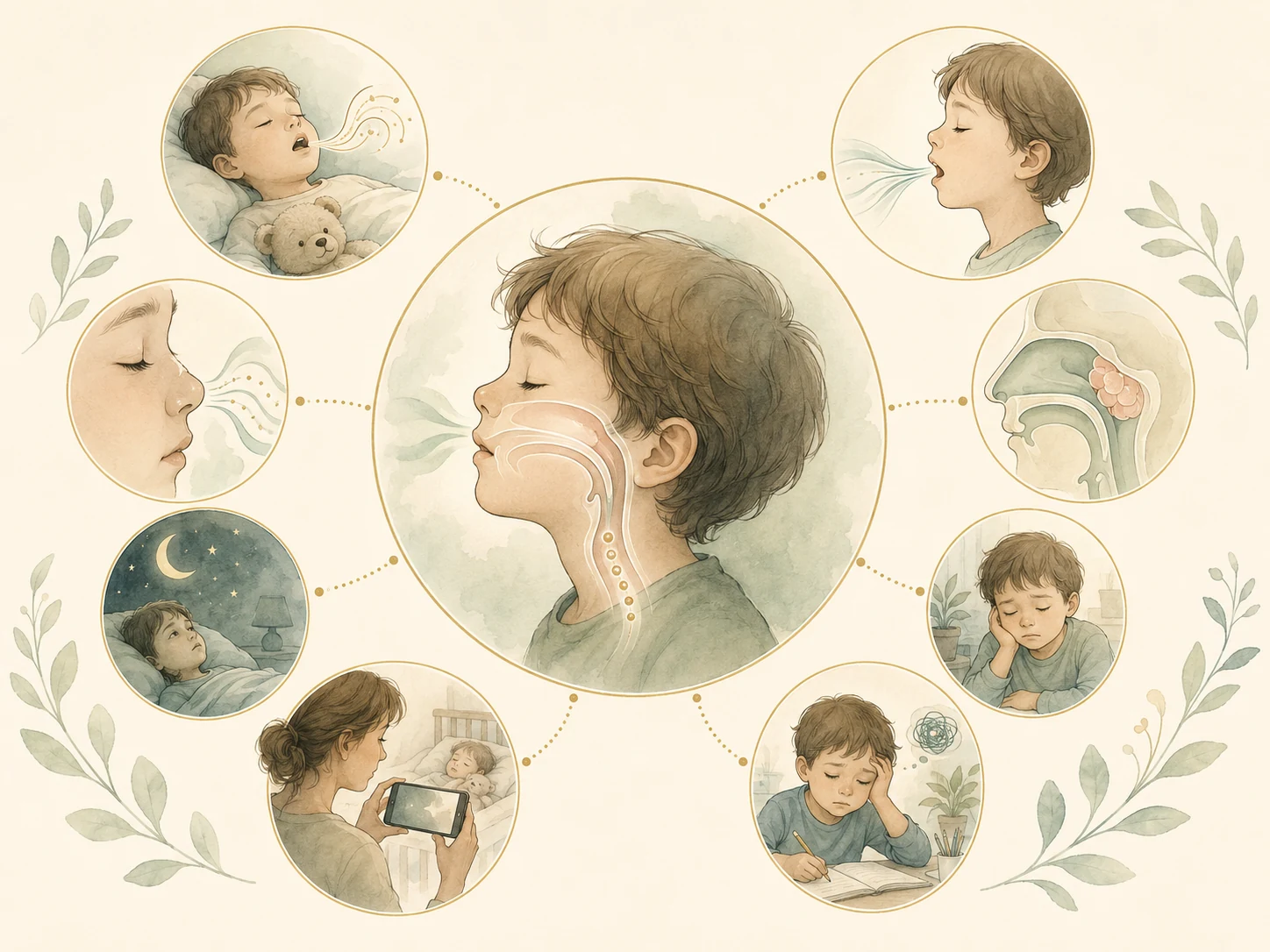
At night, parents may notice snoring, heavy breathing, gasping, restless sleep, sweating, unusual sleeping positions, bedwetting, or brief pauses followed by a snort or gasp. During the day, some children are sleepy, but others become more hyperactive, irritable or difficult to settle. Concentration, school performance and behaviour may be affected by poor-quality sleep.
How adenoids and tonsils fit in
Adenoids sit high at the back of the nose. Tonsils sit at the back of the throat. Both are part of the immune system, and both can become enlarged in children. Enlarged adenoids can make it harder to breathe through the nose, leading to noisy breathing, mouth breathing, a blocked-nose sound, nasal speech, snoring and disturbed sleep.
When tonsils and adenoids narrow the airway during sleep, some children develop obstructive sleep apnoea, where breathing partly or completely blocks for short periods. Not every snoring child has sleep apnoea, but loud regular snoring with pauses, gasping or daytime effects deserves attention.
Allergy, recurrent infections, nasal blockage, weight, craniofacial differences and neuromuscular conditions can also contribute. That is why assessment looks at the whole child rather than the snoring sound alone.
What assessment may involve
A clinician may ask how often snoring happens, whether there are pauses, how the child sleeps, whether they breathe through the mouth in the day, whether speech sounds nasal, and whether there are hearing, ear, allergy or infection symptoms. Growth, daytime energy, behaviour and school concerns may also be relevant.
Examination may include looking in the mouth, checking tonsil size, assessing nasal airflow and looking for signs of allergy or nasal blockage. Sometimes further tests are needed, such as hearing tests, allergy management, nasal endoscopy, overnight oxygen monitoring or a sleep study, depending on the severity and local pathways.
Treatment depends on the cause and severity. Mild symptoms may be watched or managed medically if allergy or nasal inflammation is part of the problem. More significant obstructive sleep apnoea related to enlarged tonsils and adenoids may lead to discussion about surgery, usually after weighing benefits, risks and the child’s overall health.
When to seek help
Discuss symptoms if your child snores loudly most nights, has witnessed pauses in breathing, gasps or chokes during sleep, breathes mainly through the mouth, has restless sleep, struggles with daytime tiredness or hyperactivity, or has concerns with growth, behaviour, concentration or school.
Sources and further reading
This article is general public information and was written using UK, European and well-regarded US sources. It should not replace personal medical advice.
- Obstructive sleep apnoeaGreat Ormond Street Hospital
- Inflamed adenoidsGreat Ormond Street Hospital
- Sleep apnoeaNHS
- Paediatric snoring and obstructive sleep apnoea guidelineENT UK
- Pediatric obstructive sleep apneaMayo Clinic
More reading
Related articles
Use your usual healthcare route for symptoms. For professional, education, writing or website enquiries, use the contact section on the homepage.