What glue ear is
Glue ear is the common name for otitis media with effusion. It means fluid has collected behind the eardrum in the middle ear. It is different from a typical painful ear infection because there may be no fever, no severe pain and no obvious signs that anything is wrong.
The middle ear normally contains air. The Eustachian tube helps equalise pressure and drain fluid from the middle ear towards the back of the nose. In young children this tube is smaller and less efficient, especially after colds or with enlarged adenoids. Fluid can remain behind the eardrum and make sound seem muffled.
Glue ear is common in childhood. Many episodes clear by themselves, but persistent or repeated glue ear can affect hearing, speech, confidence and school listening.
Signs at home and school
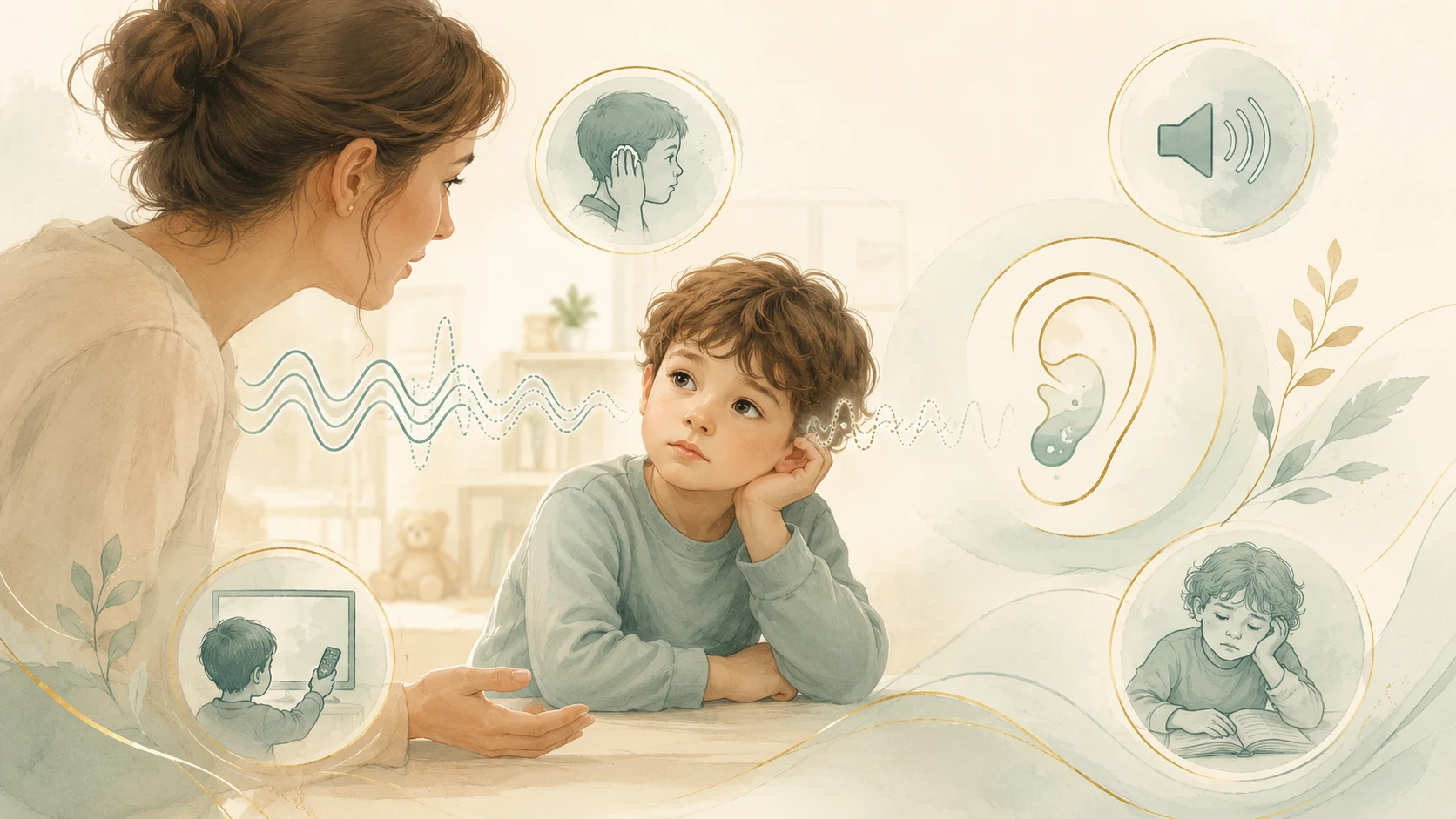
Children with glue ear may not say “I can’t hear”. They may seem not to listen, ask for repetition, turn the television up, sit close to screens, miss instructions, watch faces closely, speak loudly or become tired and frustrated in noisy places.
At school or nursery, glue ear may look like daydreaming, inattention, delayed responses, unclear speech, difficulty following group instructions or behaviour that changes when the room is noisy. Hearing may fluctuate, so a child can appear to hear well one day and poorly the next.
Assessment and treatment options
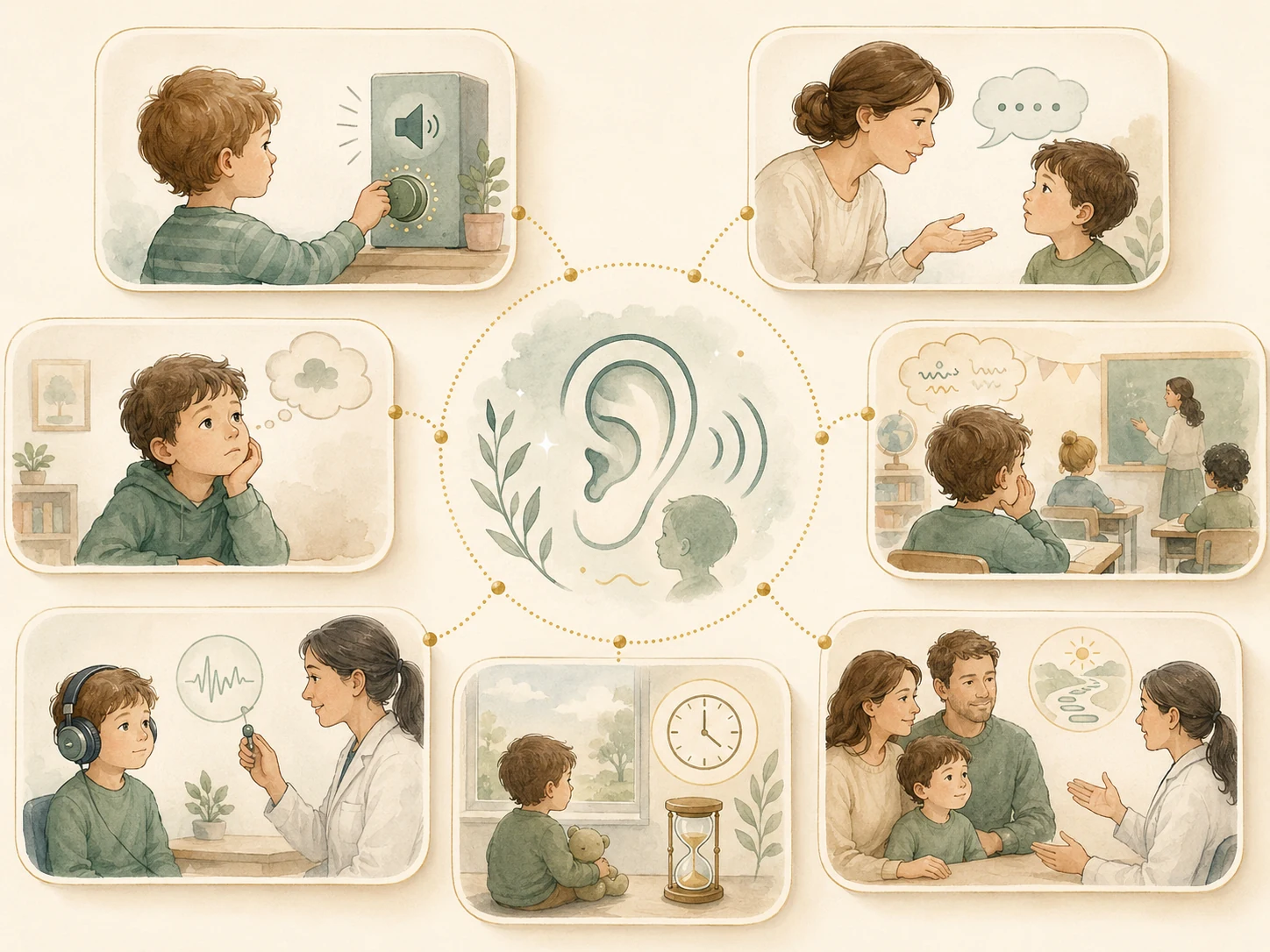
Assessment usually includes looking at the ears and arranging a hearing test. Tympanometry, a quick test of eardrum movement, can help show whether fluid is present behind the eardrum. Speech, language, school progress, sleep, recurrent ear infections and nasal or adenoid symptoms may also be relevant.
Management depends on the child’s age, hearing level, duration of symptoms, impact on development and whether one or both ears are affected. Many children are monitored at first because glue ear often clears. Practical support can help while waiting: face the child when speaking, reduce background noise, gain attention before giving instructions, and let teachers know about suspected hearing fluctuation.
If glue ear persists and hearing is affected, options may include hearing support, grommets or adenoid assessment depending on age, symptoms and guideline-based discussion. Grommets are tiny ventilation tubes placed in the eardrum to let air into the middle ear. They are not needed for every child, but they can be helpful in selected cases.
When to seek advice
Arrange a hearing check if your child often asks for repetition, turns up volume, struggles with speech clarity, seems inattentive, has school listening concerns, has repeated ear problems, or if you have any concern about hearing or language development.
Sources and further reading
This article is general public information and was written using UK, European and well-regarded US sources. It should not replace personal medical advice.
- Otitis media with effusion in under 12sNICE guideline NG233
- Glue earNHS
- Glue ear / otitis media with effusionENT UK
- Glue ear and children’s communicationSpeech and Language UK
More reading
Related articles
Use your usual healthcare route for symptoms. For professional, education, writing or website enquiries, use the contact section on the homepage.